

BC’s Bookshelf
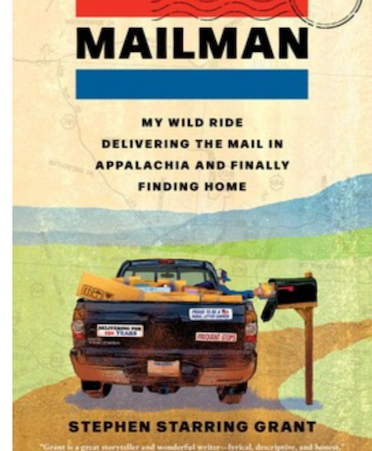
Mailman: My Wild Ride Delivering the Mail in Appalachia and Finally Finding Home by Stephen Starring Grant 2025
WHY This Book: This book was recommended to me by a very dear friend, and I wanted a good book to take to the beach. Wanted something in the fiction bucket, but the title and the description of the book appealed to my sense of “going home” stories.
WHO About the Author: Stephen Grant became a rural mail carrier during the pandemic in March 2020. The world was shutting down and so was his marketing job at a marketing firm. With a family and the need to have an income and benefits, Grant moved back to his hometown area of Blacksburg, Virginia and became a rural mail carrier for about a year.
WHAT’s Inside:
Organization: The book chapters take the reader through the experiences and revelations made by Grant delivering mail in Blacksburg; through the areas near Virginia Tech and ALL of the two-laned, dirt, and gravel roads that define rural Virginia. Grant tells amazing stories about feeling of being inadequate to learn all the nuances of sorting and organizing mail, the physicality of delivering the mail, and the perils and rewards of going down pitch dark gravel roads and some that cross moving water. Understanding that “people are waiting” keeps mail carriers going—it is their mission.
My Take-A-Ways:
Before reading this book, I never gave much thought about what it takes to get mail delivered to my mailbox everyday regardless of the weather. The behind the curtain processes and people that sort and transport mail from one place to another, much less the person who puts it all in the mailbox, was mostly invisible. Mailman made this and much more visible. The collection of Grant’s memories show how something that looks simple—is not; the commitment of public service is alive and well in spite of some who might believe the contrary; being uncomfortable is the greatest gift we can receive; offering dignity and care to everyone costs nothing; and we are more capable and resilient to face uncertainty and hardship than we understand.
In the year Grant spent delivering mail on all of the rural routes in Blacksburg, it did indeed give the family income and benefits needed. It also helped him reconnect to his past and family. He also found a higher connection with humanity by learning the importance of individual impact. He learned about WHO was behind the address—not just a number on a road. That letter or a package delivered to someone—someone who was waiting for a card, a new book, a magazine, a new dress, an absentee ballot, a new laptop, “junk” mail—really anything given to the USPS to deliver—matters. It’s personal and creates an important human connection that helps us really see and know each other.
So What?:
There is always someone behind the curtain. Someone you don’t see or talk to, but that makes a difference in your world. Often the work and chores that are taken for granted. Taking the time and effort to see people and have gratitude in those everyday things, creates connection and might just increase our compassion for each other.
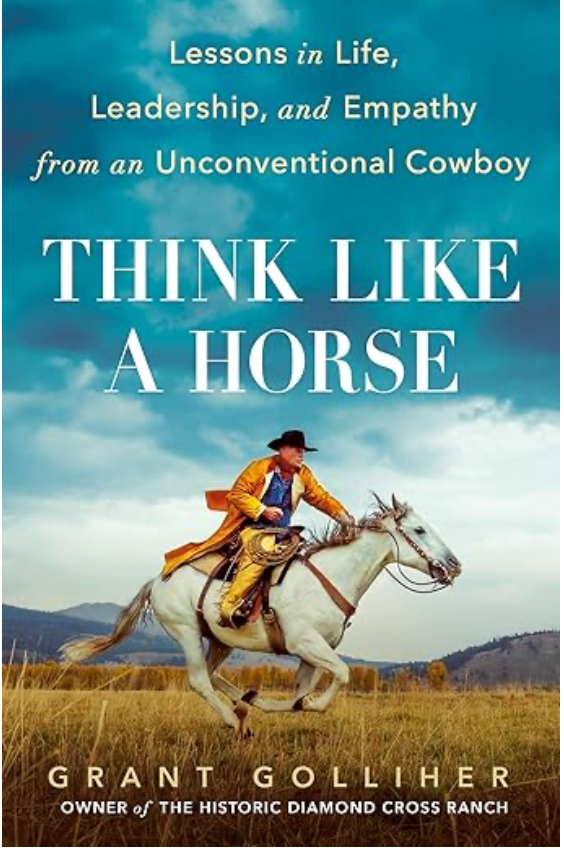
Think Like A Horse by Grant Golliher 2002
WHY This Book: I LOVE horses and I LOVE riding them. In fact, I just got my very own horse last November. A horse will not work for you if they do not trust you or if you don’t treat them well. You really have to have a collaborative relationship and agree upon shared language and expectations with each other. When I was looking for books to read, this one popped on the search results and I was intrigued. I wanted to learn what Golliher understood about horses that could apply to how we coach and lead others and I can use with my new horse Eleanor.
WHO About the Author: Grant Golliher has worked with horses for over 50 years. First as a ranch hand, then as a professional polo player, and now as owner of Diamond Cross Ranch in Wyoming. People have referred to Golliher as a “horse whisper” because of his ability to create connections with horses and reach “untrainable” horses. At Diamond Cross Ranch, Golliher conducts workshops and retreats for groups from all sectors and for all sizes. The sessions. Include demonstrations of Golliher working with a difficult or untrained horse. Attendees see Golliher transform an unmanageable horse to being willing to accept him in the ring and in the saddle. Golliher believes you just “have to think like a horse” and take those lessons you learn with a horse into your people world to succeed.
WHAT’s Inside:
Organization: The book chapters are organized around 12 lessons Golliher learned from all the years working with and training horses. The chapters explain how the lessons applies to horses and connects it to what it means for us navigating the human herd.
My Take-A-Ways:
Leading is about a philosophy NOT a method. This goes in the face of what we all want-a formula a gameplan. This takes not only using our intuition (yes we do all have intuition) but trusting it.
Learning the “feel”. Golliher says that can’t be taught; it must be learned. He uses the example of learning to drive a shift….at some point you just know when to press in the clutch to shift—it is all about the feel. That requires showing up and paying attention to others and our environment and practice and practice and practice. It requires us to be really present with all our senses, our mind and our heart.
Clear and consistent boundaries create and grow trust, and strong relationships. Golliher says (p.79) “If you compromise your boundaries for the sake of the relationship, sooner or later you will lose the relationship.”
Managing those boundaries—(p. 89) “making the right thing easy and wrong thing hard”, supports consequence and rewards for individual choices. In the end the choice is about them not you.
Lastly, (p.204) “don’t be afraid to move your feet”. When you are facing fear, the unknown, or uncertainly, look past it and do it anyway. Putting yourself in an uncomfortable situation is the only way you will grow. Weigh taking risk, growth, and learning above choosing safety and complacency.
So What?:
Leadership requires presence, clarity, and courage. You can’t call it in. You need to be all in on knowing and understanding those you lead or look to you for leadership. Know your boundaries and expectations and communicate them clearly and often. Being nice doesn’t earn you respect. Being nice is a tradeoff for current peace that leads to future chaos. You must practice even when it looks ugly and messy. Understand that we all bring a past with us into the now; however, we can choose to make a different future.